
Rhinoplasty in Montreal: Everything You Need to Know Before Surgery
Rhinoplasty can change the shape of the nose, improve how it relates to the rest of the face, and, in some cases, address structural problems that interfere with breathing. These goals often overlap, which is why planning a nose operation involves more than choosing a preferred shape from a photograph.
The nose is built from bone, cartilage, skin, and internal support structures. A change to one area can affect another: narrowing the bridge may influence airflow, rotating the tip may alter nostril shape, and reducing a prominent feature without preserving support can create problems over time. Modern rhinoplasty therefore places as much emphasis on structure and function as it does on appearance.
What can rhinoplasty address?
People consider rhinoplasty for concerns such as a dorsal hump, a broad or asymmetrical bridge, a drooping or poorly defined tip, nostril imbalance, or changes caused by injury. Others seek help for nasal obstruction related to the septum, turbinates, or nasal valves. When cosmetic and functional concerns are present together, they can often be assessed within the same surgical plan.
The appropriate changes depend on the proportions of the entire face. A feature that appears prominent on one person may be well balanced on another. Skin thickness, cartilage strength, previous trauma, ethnic characteristics, and earlier surgery also influence what can reasonably be achieved.
Open and closed approaches
Rhinoplasty may be performed through an open or closed approach. In closed rhinoplasty, incisions remain inside the nostrils. Open rhinoplasty adds a small incision across the columella, allowing the nasal framework to be exposed more fully. Neither method is universally better. The choice depends on the work required, the surgeon’s ability to control the structures involved, and whether the case is primary, reconstructive, or revision surgery.
Planning for function as well as appearance
A careful assessment includes the outside and inside of the nose. Symptoms such as persistent blockage, difficulty breathing during exercise or sleep, and a history of injury can point to functional issues that deserve attention. Septoplasty corrects the nasal septum, while functional rhinoplasty may also reinforce or reposition other parts of the airway. These terms are related but not interchangeable.
What recovery usually involves
Most patients experience congestion, swelling, and bruising during the early recovery period. A nasal splint is commonly worn for roughly the first week, depending on the operation. Many people feel ready to return to non-strenuous work once the splint is removed and visible bruising has eased, although exercise and contact activities remain restricted longer.
Swelling does not resolve all at once. The bridge often settles before the tip, and subtle refinement may continue for many months. Revision surgery and thicker skin can extend that timeline. Follow-up visits help monitor healing and guide the gradual return to normal activity.
Risks and decisions worth understanding
Rhinoplasty carries risks including bleeding, infection, prolonged swelling, altered sensation, asymmetry, contour irregularities, scarring, and persistent or new breathing difficulty. Occasionally, further surgery is considered after healing. Patients should understand which steps address appearance, which address function, whether grafting may be needed, and how a proposed change affects the nose from several views. A technique cannot eliminate biological uncertainty; appropriate selection, careful execution, and follow-up are what manage it.
A decision built around anatomy
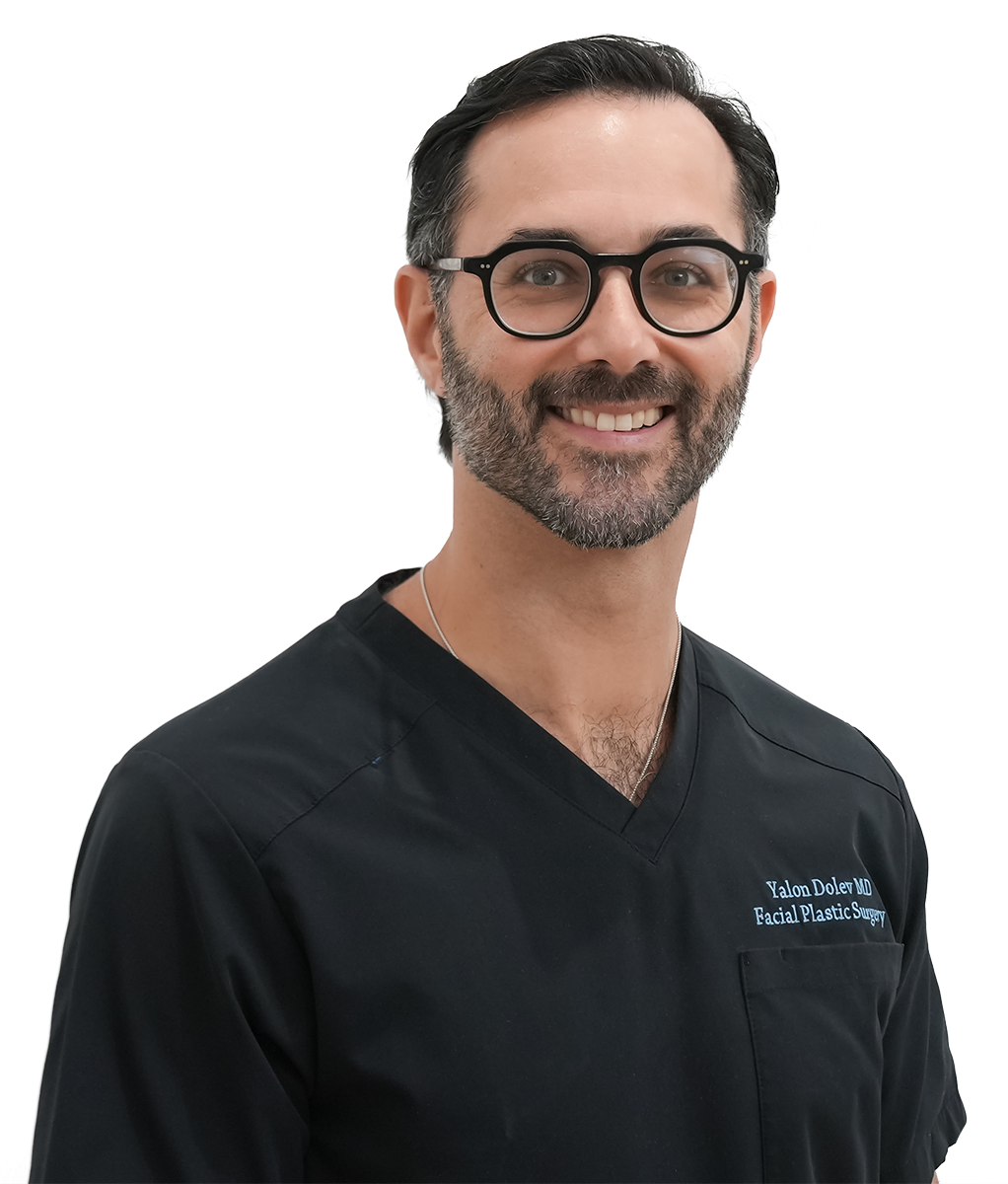
Good rhinoplasty planning starts with a clear description of what bothers the patient and an equally clear discussion of what surgery can and cannot change. Dr. Yalon Dolev approaches rhinoplasty from the perspective of a facial plastic surgeon and otolaryngologist, considering appearance, support, and nasal function together.
If you are considering rhinoplasty in Montréal, a consultation can clarify which concerns are structural, which are aesthetic, and what approach may suit your anatomy.
Considering Rhinoplasty in Montréal?
Schedule a consultation with Dr. Yalon Dolev to discuss your goals, nasal function, and the options appropriate for your facial anatomy.